
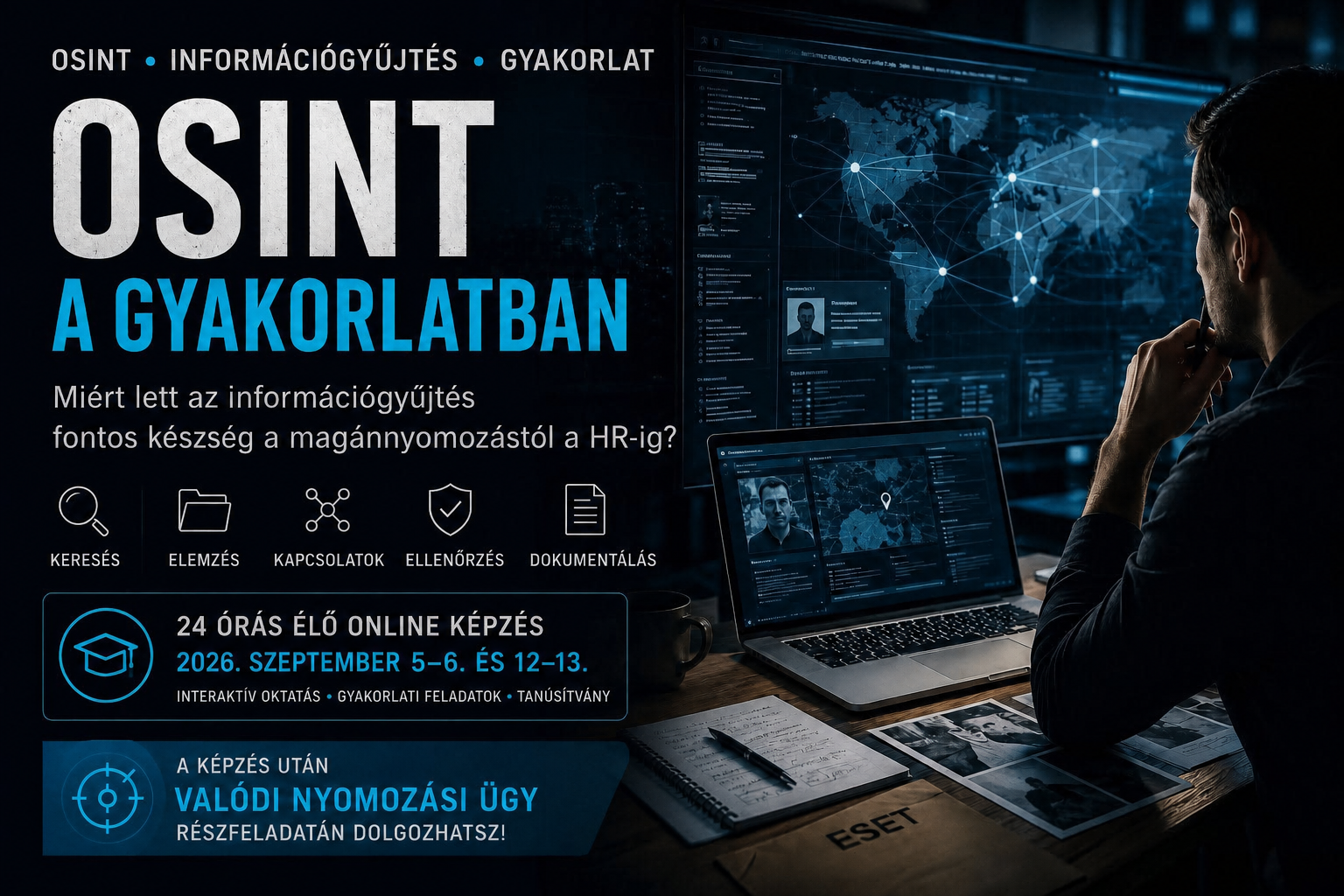
Websites, social platforms, corporate records, public documents, professional databases, photographs and videos may each contain fragments that appear insignificant alone. When connected through a sound method, they can reveal a very different picture.
This is the field of OSINT – Open Source Intelligence: structured intelligence gathering from publicly and lawfully accessible sources.
The essential questions are what to search for, where to look, how to verify the result and what conclusion the evidence actually permits.
Information is not yet intelligence
Professional research must test where information came from, how reliable and current it is, whether independent sources corroborate it, how it relates to other findings, and whether the conclusion goes beyond what the evidence supports.
OSINT is useful far beyond private investigation
HR and recruitment professionals may need to verify public professional claims lawfully. Compliance, KYC and due-diligence teams reconstruct companies, ownership links and business relationships. Lawyers research and document publicly available facts. Cybersecurity teams map online exposure and connect digital traces. Business leaders can reduce risk by checking a new supplier or partner before making a commitment.
The foundations are accessible to students, early-career professionals, entrepreneurs and interested members of the public as well. What matters is learning to ask better questions: What am I seeing? How do I know it is true? What independent source can confirm it? What is missing from the story?
Verification and documentation
One source rarely provides a complete answer. Reliable conclusions depend on triangulation, transparent documentation and an awareness of legal and ethical limits. The strongest investigator is not the person who collects the most data, but the person who can show how each conclusion was reached.
Learning through practice
Search strategies, people and company research, social-media traces, images, locations, public databases and source verification all improve through structured practice. Live case analysis helps learners see how isolated findings become an evidence-based investigative picture.
Intensive OSINT training on 14–15 November
The two-day Hungarian-language programme covers investigative thinking, digital traces, people and company research, verification, legal and ethical frameworks, and practical exercises.
Course details and registration →